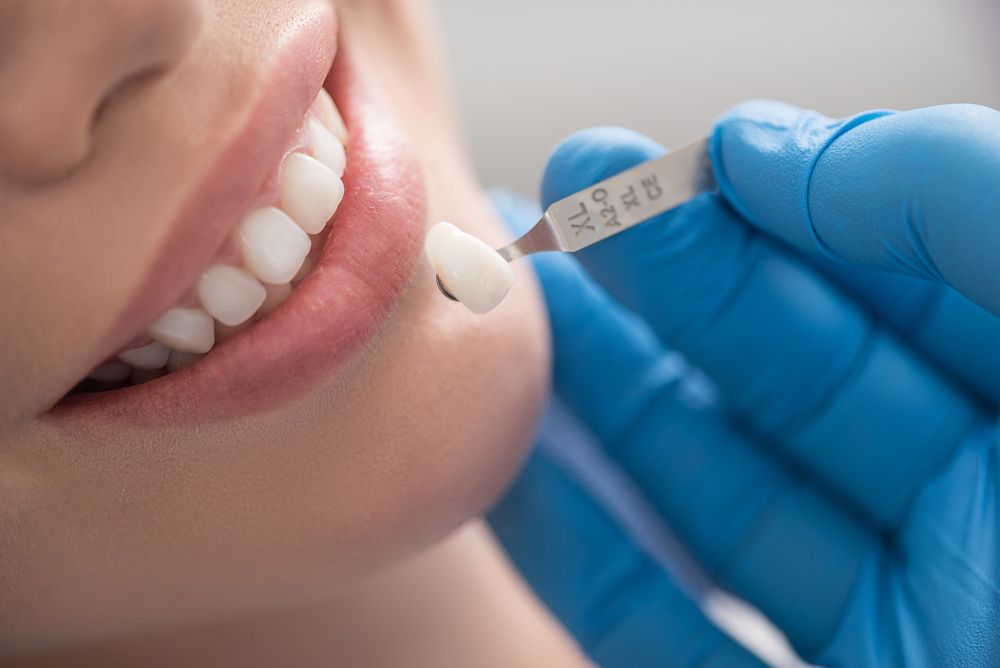

If you have had a crown, a retainer, or a set of dentures made in the past, you probably remember the impression tray. A mouthful of cold putty, a few minutes of trying not to gag, and a dentist telling you to hold still. For a lot of patients it was the worst part of the appointment.
That step is gone at Beausejour Dental Centre. We take digital dental impressions with an intraoral scanner instead, and the difference is big enough that patients who have had both usually ask why anyone still does it the old way.
Here is what actually happens, where the scan gets used, and the handful of situations where a traditional impression still makes sense.
What a digital dental impressions are
A digital impression is a 3D model of your teeth and gums captured with a small handheld camera. The scanner wand is about the size of an electric toothbrush. Your dentist or assistant moves it slowly across your teeth while it takes thousands of images per second and stitches them into a model on the screen beside you.
We use a Dentsply Sirona Primescan, which is the same class of scanner you would find in a large city specialty practice. Patients in Beausejour and across the Eastman region do not need to drive to Winnipeg for this.
What it feels like from the chair
Most patients are surprised by how little there is to it.
- No tray, no putty. Nothing fills your mouth. The wand touches your teeth lightly or hovers just above them.
- You can breathe and swallow normally. Gagging is rare because nothing sits against the back of your palate.
- It takes a couple of minutes. A full arch scan is usually done in under two minutes. If we miss a spot, we rescan just that area rather than starting over.
- You see the result immediately. The model appears on the screen as it builds, so you can see exactly what your dentist is looking at.
If you are a nervous patient, this is one of the parts of modern dentistry that has changed the most. There is nothing to brace for.
Why the scan is more accurate than putty
Traditional impression material can distort. It shrinks slightly as it sets, it can pull away from the teeth when the tray comes out, and it has to survive a trip to the lab before a model is poured. Each step adds a small error, and small errors are why crowns sometimes need adjusting at the delivery appointment.
A digital scan has none of those steps. The model is captured directly and sent as a file. That is one of the main reasons our same-day CEREC crowns fit the way they do: the crown is designed and milled from the scan itself, not from a copy of a copy.
Where we use digital impressions
The scanner is not a novelty we bring out for one procedure. It has replaced the tray for most of the work we do.
Crowns and bridges. The scan feeds straight into the CEREC design software. For a single crown, that means design, milling, and placement in one visit.
Orthodontics and clear aligners. Aligner cases start with a scan rather than a putty impression, which is a relief for teens and adults alike. Learn more about our orthodontic options, including clear aligners.
Dentures. A scan of the gums and any remaining teeth gives the denture lab a clean starting point. If you are exploring dentures or implant supported dentures, expect the scanner at your records appointment.
Nightguards and sports mouthguards. Custom guards are made from the same scan, which is why a scanned guard fits snugly instead of feeling bulky.
Monitoring over time. Because scans are stored as files, we can compare this year’s model to last year’s and see exactly how much a tooth has worn, or whether a crack is getting longer. That kind of tracking was not practical with plaster models.

When a traditional impression still makes sense
We want to be honest that the scanner is not the answer for every case. A few situations still call for a conventional impression:
- Some full denture cases where capturing the soft tissue under gentle pressure matters more than sharp tooth detail
- Very deep margins under the gumline where blood or saliva block the camera
- Specific lab workflows that still require a physical model
Your dentist will tell you if your case is one of these. For the large majority of patients it is not.
What this means for kids
Children often struggle most with impression trays, and a bad experience early on can make them dread the dentist for years. A scanner turns the same step into something closer to a game. If your child needs a space maintainer, a retainer, or a mouthguard, the scan is quick and painless. Our children’s dentistry team is used to walking young patients through it.
The bigger picture
The Canadian Dental Association describes digital dentistry as one of the fastest growing areas of the profession, and impressions are where most patients meet it first. It is a small change in the chair that improves accuracy, cuts appointments, and removes one of the most disliked parts of dental treatment.
If it has been a while since you had any restorative work done, you may find your next visit looks quite different from the last one.
Frequently asked questions
Does a digital dental impression hurt? No. The scanner wand touches your teeth lightly or hovers just above them. There is no material in your mouth, no pressure, and nothing to bite down on. Most patients describe it as simply having their teeth looked at closely.
Are digital dental impressions as accurate as a traditional one? For most restorative and orthodontic work, digital impressions are as accurate or more accurate than putty impressions, because they skip the shrinkage and handling steps that introduce error. There are a few specific cases, such as some full dentures, where a conventional impression is still preferred.
Can I get a digital dental impressions at Beausejour Dental Centre? Yes. We use a Dentsply Sirona Primescan intraoral scanner for crowns, aligners, dentures, mouthguards, and nightguards. It is part of a standard appointment, not a separate visit.
Ready for a better impression?
If you have been putting off a crown, a retainer, or a guard because you remember the tray, it is worth another look. Call us at 204-268-1782 or book online, and we will show you the scanner before we start.